
Anna’s Story
Anna shares how a moment of desperation during chemotherapy led her to try Luma³. Transforming her from a breathwork sceptic into a passionate advocate after experiencing its immediate impact.
In this article, you’ll meet Anna, a former police officer, mum, wife, and a woman who is fiercely headstrong and independent. Anna never thought or believed she would ever turn to breathwork as a method to calm her down during moments of unpredictability and uncertainty, but she’s now a complete convert.
When she was diagnosed with breast cancer, she approached it with the same mindset that had shaped her career: direct, pragmatic, and evidence-driven. But during her treatment, she encountered something she hadn’t ever experienced before — anxiety. Her anxiety felt suffocating and uncontrollable; in some ways she couldn’t even ‘think herself out of it’, a method that had previously worked before.
What followed in her cancer journey wasn’t just treatment and procedures, it was a complete shift in her perspective. From rolling her eyes at Luma³ and saying, “I don’t need that, what nonsense,” to asking for it by name, Anna’s story is one of scepticism and doubt but also one of surprise and transformation. Anna is brutally honest, heartwarming, and shares a perspective we believe many people will relate to.
Meet Anna
Anna describes herself as someone who has always gone her own way. Independent from a young age and entering the police force in 1999, she quickly adapted to a mindset shift of mental resilience, control, and evidence-based thinking, so much so they became a part of her everyday life.
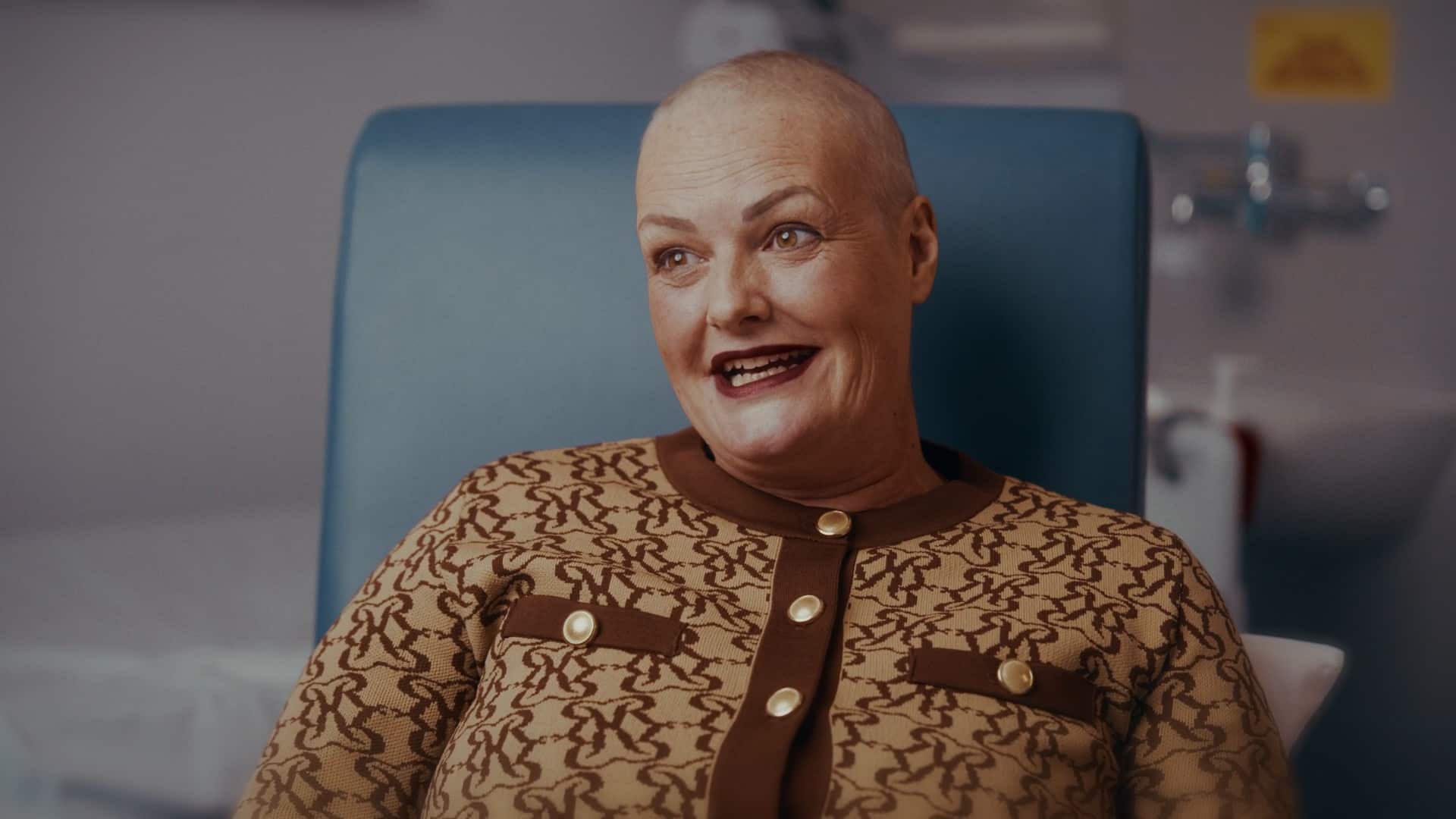
Anna has always been headstrong and focused, but after retiring from the police in 2018, she hadn’t fully realised how deeply that environment had shaped the way she thought and coped. Over time, she began to see that the resilience she relied on was, in many ways, a form of protection, “like wearing a mask,” she says, one that would later be challenged in ways she never expected.
Outside of work, she’s a mum, a wife, “to a wonderful man who’s still in the police”, and someone who enjoys life’s lighter moments, whether that’s time with friends causing mischief, lightening a situation with humour, or simply taking care of herself. Her sense of identity and humour have remained important throughout her treatment and became her anchor during moments of intense change.
A Diagnosis Anna Refused to Ignore
Anna’s breast cancer diagnosis began during a holiday in Hawaii with her husband, when she noticed a small but unusual change in her nipple after spending the day in the sea and enjoying the sunshine. That post-beach shower changed everything. Drawing on her ability to compartmentalise, she booked a doctor’s appointment straight away but mentally put it to one side until she returned home, without telling her husband or anyone around her. Once she arrived back on UK soil, she acted quickly.
Despite early reassurance that it was likely a cyst, Anna trusted her instincts and pushed for further investigation. “I said, ‘I absolutely do not want to go away and monitor it. I want to be referred.’”
That continued persistence led to a diagnosis of estrogen receptor-positive ductal carcinoma that had already spread to her lymph nodes. “It turned out I had three quite large tumours in a diagonal line from the top of my breast down towards my tummy. There were also two starburst areas of small tumour grains in other parts of the breast, which is why the whole breast had to be removed.” Surgery followed, along with a long and physically and mentally demanding course of chemotherapy.
“I had the surgery on the 30th or 31st of July, and there was a little hiccup during the operation. It ended up being an eight-and-a-half to nine-hour surgery. I’ve got Crohn’s disease as well, so I had a massive flare-up on the operating table. My body was under so much stress that it went into severe inflammation, and they actually had to sit me up to sew me back together. That’s why my stomach scar is quite horrific — they almost couldn’t close me back up again. For six weeks, I was walking with a stick, bent double. I couldn’t stand up straight, and I couldn’t lie flat because the skin was so so taut.”
Anna’s Experience with Chemotherapy and Anxiety
Anna’s chemotherapy journey began in September, following her surgery. She describes the physical impact as brutal: “Initially it was once every three weeks and it was brutal, it made me lose all of my hair and made me feel really poorly.” After three months, she switched to a different chemotherapy regimen, which was administered weekly.
Beyond the physical toll, Anna experienced anxiety in a way she hadn’t before. “I never understood when someone said they struggled with their mental health. I used to think we all go through bad things and it’s about getting up and getting on with it. But during chemo and before treatments, I found myself in that anxiety, and I couldn’t just think my way out of it. There was nothing I could do.” Her anxiety triggered surges in blood pressure and heart rate, at times stopping her from undergoing treatment.
A Moment of Desperation: Discovering Luma³
For weeks, Anna had noticed the Luma³ quietly resting on the hospital tables beside each chemotherapy chair. She’d pick one up occasionally, roll her eyes, fiddle with it for a second, and set it back down. “Someone told me it was for pain management and anxiety, and I just thought, ‘I don’t need that, what nonsense,’” she recalls. Even with the lovely encouragement from staff, Anna remained sceptical. “I think the general feeling was, ‘I’ve got cancer, what’s that going to do for me?’ But honestly, it turned out to be a real eye-opener, because it actually does a lot.”
It wasn’t until a particularly stressful treatment day, when her blood pressure spiked and threatened to delay her chemotherapy again, that Anna finally reached for Luma³. She remembers the feeling vividly: her head “felt like it was in a compression chamber,” every sound, smell, and light sensation overwhelming.
Despite the horror, she still wanted the treatment, the drive to fight for her life overpowering the side effects. “After each cycle, I might only have two or three days where I could function. I’d tell myself I was going to get up and do things, but I’d barely make it to the door before feeling so exhausted and sick that I had to turn around and get back into bed.”
When a nurse offered Luma³ that day, Anna hesitated. “I thought, ‘Oh, nonsense. I just want the treatment. I’ll take the consequences.’ But then I thought, ‘Come on, Anna, stop being so bloody pigheaded. What’s it going to hurt?’ So I decided to give it a go.”
The results were immediate and undeniable for me. Within 90 seconds of holding Luma³ and following the guided breathing programme, her heart rate dropped from 145 to 98, allowing her treatment to proceed. “I’m very evidence-driven, so seeing it happen right there on my monitor was undeniable. Mind blown. It completely blew my mind that something so simple could [calm me down] and have such an immediate, measurable effect.”
What had once been a sceptical glance at a small gadget became a turning point. “It’s not a medication or a medical implement, it’s just this little box that fits in your hand. That little box allowed me to get the treatment I needed. I was such a cynic. Part of me didn’t think it would work because it seemed so simple… Now, I’m an absolute convert. I can’t tell enough people about it.”
“Luma³ has given me control. I know it’s going to work. I went from rolling my eyes to actually asking for it — what a turnaround.”
Anna reflects on the change in herself: a willingness to try something outside her usual evidence-based approach, a reminder that even the simplest tools can have profound effects. “I needed to be more open-minded, not so shut down to alternatives. Using it was dead simple, completely natural. That’s the beauty of it. Anyone can use it, even if someone else has to hold it, as long as you can see. I used the blue 4×4 breathing programme, held it, and it was fabulous.”
Using Luma³ During Painful Procedures
Anna’s next experience with Luma³ came during a PICC line removal, a procedure she described as intensely painful for her. “So when it comes to getting it out, there’s really no easy way. They don’t give you any sedation or pain relief, it’s just a ‘hold your breath and pull’ situation.” She recalls that moment vividly, sweating, with her blood pressure and heart rate rising. In that moment of panic and pain, she shouted “I need a Luma!” and the staff rushed to get it for her.
“The physical discomfort on a scale of 10… was nine verging on 10. And when I got the [Luma³] box, I couldn’t hold it because I was in that much pain.” With a staff member holding Luma³, she focused on her breathing, found a sense of calm, and within seconds the PICC line was removed smoothly, with no complications.
“It was just mind-blowing. Absolutely mind-blowing.” She goes on to say, “How can you go from off-the-scale pain to looking at a [Luma³] box and exactly the same thing occurring and go to no pain.” The experience was witnessed by other patients, some curious and some sceptical, and highlighted Luma³’s potential to support a greater sense of calm and control during challenging procedures.
“Everyone started having a little go with it, and I thought, you know what, that couldn’t have gone better because I was surrounded by sceptics, just like I used to be. Even though they hadn’t experienced it themselves, they’d just seen it work for me. There was no screen or anything around me, I’m not bothered about that, so it all happened in full view. I was fine at first, saying ‘just get on with it,’ and then suddenly I was like, ‘you’re going to have to stop, this is horrific, get me the [Luma³] box.’ and that’s when everything changed.”
“Even if you think you don’t have anxiety, by the nature of what you’re going through, you’re going to have some anxiety whether you realise it or not. And this little [Luma³] box can save your life.”
Beyond the Chemo Chair
Now, Anna uses Luma³ both in hospital and at home. It helps her feel calmer ahead of appointments and supports her in winding down for sleep, particularly during periods of steroid treatment. “I’ve been prescribed sleeping tablets, and they didn’t work. Then I’ve got my little Luma³ box, no medication, no more drugs, and it allows me to get my eyes shut for a while.” Her racing thoughts and overactive brain can make it impossible for her to rest, “frogs jumping around, sheep cycling past, all kinds of nonsense. A couple of minutes on it and it empties the space, giving you calm without you even realising it.”
The simple act of following the guided light for controlled breathing has become a part of her new routine, one that she returns to daily. Anna now sees Luma³ as a tool for control and calmness, something she can and will rely on when life feels overwhelming.
Anna’s Advice for The Reader
Anna is now a passionate advocate for Luma³ Go, often sharing her experience with patients and staff alike. “Because of it, they couldn’t have picked a better person to prove itself. I was sceptical, but now I’m advocating for it and asking for it because I 100% knew it was going to work,” she says. Luma³ became a consistent source of support during chemotherapy, offering moments of calm and positivity, including during the PICC line removal. “It gave me that elation, that feeling that finally something worked, allowing me to have the treatment, just like when it helped take the PICC line out. That was a huge moment.”
“Now, in my situation, you’d walk across hot coals to prolong your life or get the treatment you need, and this simple thing makes such a difference.”
Anna is also really honest about what led her to try it in the first place. “I think desperation is what made me agree to try it. If I hadn’t been desperate, I’d still have thought it was a load of rubbish. I feel quite foolish about that now, but I’m not afraid to admit it, what an idiot, really. I sat there thinking, ‘What’s it going to hurt? I’m not going to get the treatment anyway, so why not give this a go?’ Thank goodness I did.”
She continues to advocate widely, often encouraging others to be open-minded. “I talk about this little [Luma³] box all the time. People probably think I’ve lost my mind. I’ve never really engaged with breathwork or alternative therapies before; I might do spa treatments, but my brain was always so blocked to it, and I just didn’t have any drive or interest for that to work before. Now, in my situation, you’d walk across hot coals to prolong your life or get the treatment you need, and this simple thing makes such a difference.”
“It allowed me to switch my focus and attention elsewhere, even for just a short period of time, it’s life-changing, life-saving.”
Summary
From initial scepticism to full advocacy, Anna’s experience with Luma³ shows how a simple wellbeing technique can help people feel calmer and more grounded during challenging moments.
By following the guided breathing programme, Anna discovered ways to steady herself and bring a sense of calm to her mind. Her story is a reminder not to be afraid of trying new things because sometimes, they can make a real difference.
One final message from Anna: “You’ll be okay. You’ll get through it. And if you need help, take it. And don’t be closed off. Do not be closed off to other options.”
We want to sincerely thank Anna for taking the time to share her thoughts on the Luma³ Go and her personal story.