
Russ’ Story
Russ shares how Luma³ Premium became part of his chemotherapy routine, helping him continue his scalp cooling treatment while navigating life with stage 4 colorectal cancer.
In this article, you’ll meet Russ, a communications professional turned entrepreneur, a husband, father of two, and someone who has learned how to live alongside uncertainty.
When Russ was diagnosed with stage 4 colorectal cancer at just 39 years old, life changed overnight. What followed was bowel surgery, chemotherapy, liver surgery, radiotherapy, and the difficult adjustment to living with a cancer his medical team describes as incurable, but manageable for now.
Throughout years of treatment, Russ discovered that coping wasn’t always about finding grand solutions. Sometimes, it was about finding small things that helped him through the next few minutes.
For Russ, Luma³ Premium became one of those things. Not because it made treatment disappear or that it took the pain away, but because it helped him get through the moments when very little else could.
Meet Russ
Russ is now 43 and lives in Bath with his wife, Katy, and their two children, Lyla and Rex. Before his diagnosis, Russ spent two decades building a successful career in PR and communications. More recently, he launched his own AI business (knownandcited.com), as well as his passion project, FC:AI (fcancerwith.ai), which combines his professional expertise with a growing passion for AI and healthcare innovation.
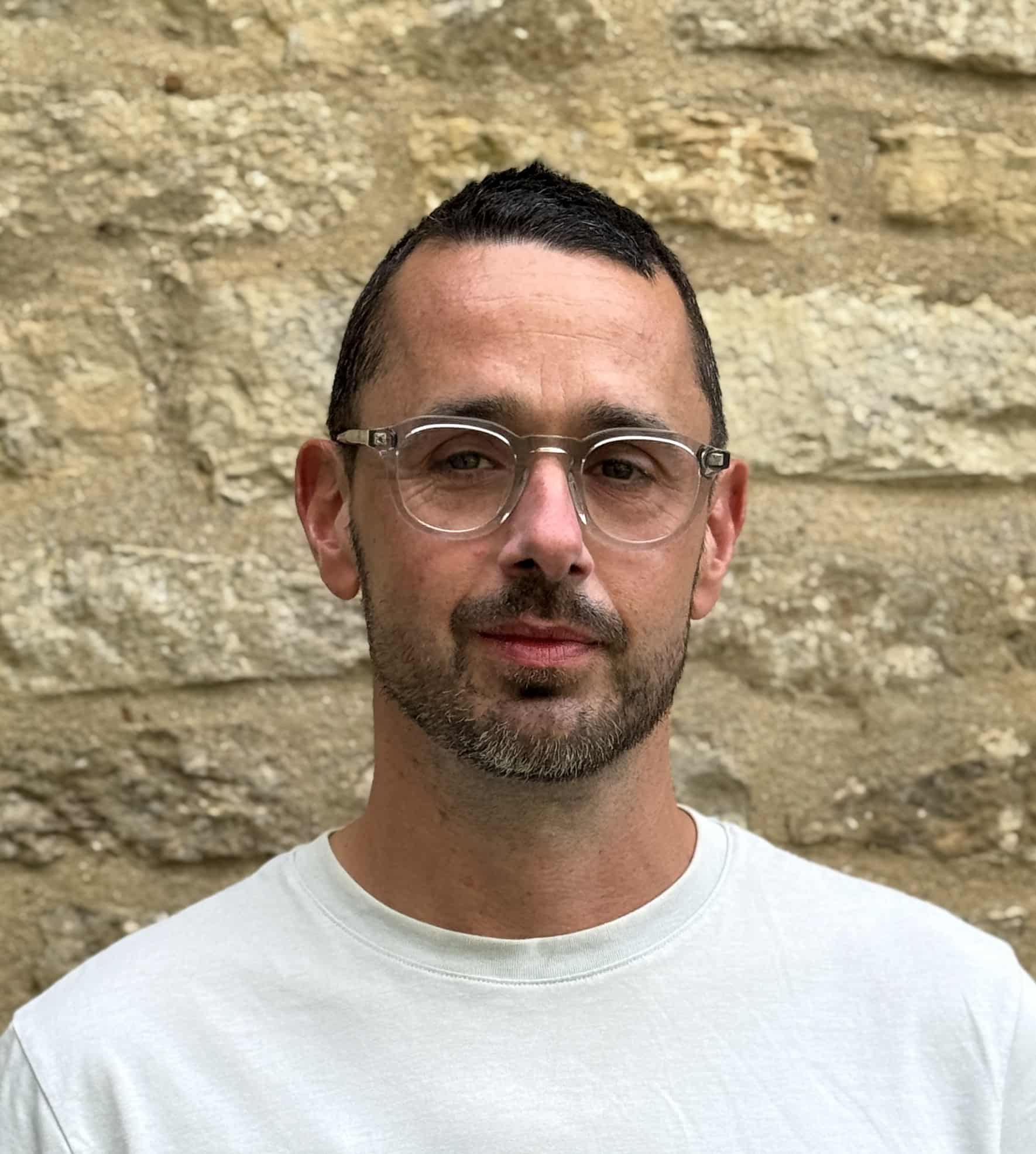
Cancer changed many things for Russ. It changed how far ahead he planned. It changed how he spent his time. But, most importantly, it clarified what mattered most to him.
On one hand, Russ speaks openly and lovingly about his unconditional love for his children. “My children are important, they are the absolute centre of everything.” On the other, he is acutely aware that living with stage 4 cancer means the future can feel uncertain. “I don’t know what’s going to happen, so you focus on what’s most important.”
Redefining Support
Russ loves his friends and deeply loves his family, it’s what has got him through some of the darkest moments of his cancer journey so far.
One of the themes Russ returns to repeatedly is the importance of the people around him. His wife, Katy, has become an extraordinary source of support throughout treatment. “Katy has always taken on more in those first few days after treatment, and that makes a massive difference.”
Friends stepped up too. “Friendships have been critical to getting us through the last five years in particular,” he says gratefully. “It shows you who your friends are.”
Living with cancer reshaped Russ’s understanding of support. “You realise what support you actually need,” he reflects. He also came to understand that support can take many forms. “Sometimes it’s not about fixing anything. It’s just about having people around you.”
The Diagnosis That Changed Everything
Russ was just weeks away from turning 40 when he first noticed blood when going to the toilet. After seeing his GP, a series of tests and investigations soon followed.
“The doctor got me in a room and told me they had found a tumour and they thought it was cancer.” What followed was a whirlwind, bowel surgery, chemotherapy, liver surgery, an unwelcomed surprise of a COVID diagnosis, radiotherapy, and eventually, ongoing treatment designed not to cure his cancer, but to manage it.
Despite everything Russ has faced, he has remained focused on living as fully as possible. Alongside treatment, he launched his own AI GEO consultancy, Known and Cited, while also creating FC:AI, a personal project exploring how artificial intelligence, data, and technology can help patients navigate the complexities of cancer treatment.
Through FC:AI, Russ openly documents the tools he uses, the systems he has built, and the lessons he learns along the way. He also shares his own health data through his “Open Source Me” initiative, tracking everything from treatment cycles and symptoms to wearable health data and everyday experiences. His goal is simple: to better understand his own cancer journey while creating a resource that other patients may find useful.
While cancer has undoubtedly changed the way he thinks about time and the future, it hasn’t defined who he is. Instead, it has strengthened his appreciation for family, deepened his sense of professional and personal purpose, and reinforced the importance of making the most of life right now.
Learning to Live with Uncertainty
Russ goes on to explain that previously, he couldn’t ever see beyond a week because of the overwhelm and uncertainty of the initial diagnosis, “There was a pretty grim stage where you literally couldn’t focus beyond a week because there was so much going on.”
And planning felt impossible for him and his family, “At one point I would have said, ‘Let’s not plan anything beyond three months because God knows what’s going to happen.'” But gradually, that changed. “Now I’m a bit more like, let’s plan stuff and if we need to cancel it, so be it.” “You realise it’s really important to have plans and things to look forward to.”
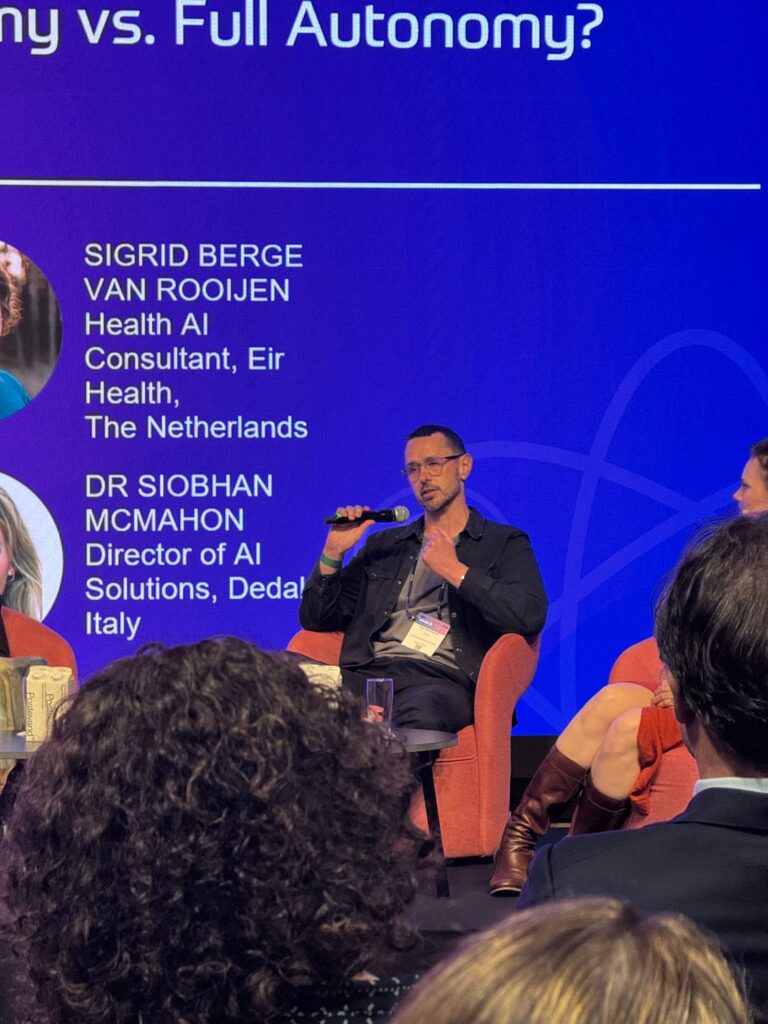
Today, Russ describes life as more stable. “I’ve got stage four cancer, so it’s very serious, but my life is actually more stable now because I know what to expect.”
Chemotherapy and Scalp Cooling
Russ’s current treatment includes FOLFIRI chemotherapy, delivered every two weeks. Compared with some of the treatments he had experienced previously, this regimen eventually became more predictable. He knew how the cycle would unfold, when he might feel well, and when he needed to give himself permission to slow down.
“The chemo days were always long.” he says. “But the hospital day wasn’t the hard part. It was what came afterwards.”
For Russ, the treatment itself wasn’t necessarily what he dreaded. In fact, the routine of hospital days became familiar for him. The nursing staff took their time, there was no pressure to be anywhere else, and gradually he learned what helped him settle into the experience.
One part of the process that took a little more adjustment was scalp cooling. Russ chose to use the Paxman cold cap to help reduce chemotherapy-induced hair loss. While everyone’s experience is different of scalp cooling, he found the first few minutes were the most challenging as he adapted to the sensation.
“It wasn’t my favourite part of treatment,” he says with a smile. “The cold cap at the beginning is definitely the hardest bit.” But for Russ, the results made it worthwhile.
“The second time around I did the cold cap from the beginning for all six cycles and I didn’t have any hair loss at all,” he explains. “Because it worked, I would absolutely do it again.”
As treatment continued, he found ways to settle into the routine, knowing that once those initial minutes had passed, things became much more manageable.
Discovering Luma³ Premium
Russ first came across Luma³ Premium unexpectedly. After sharing some of his honest and unfiltered treatment experiences on LinkedIn, Jack Forster-Darwin, a Training Specialist from Paxman reached out after seeing one of his posts.
“Jack from Paxman got in touch with me after I’d posted about my experience online,” he recalls. “He mentioned Luma³ and asked if I’d like to try one because it might help the scalp cooling become more tolerable.”
Curious and open-minded, Russ decided to give it a go.
“I didn’t know much about it, but I gave it a go and ended up taking it with me every time.”
For Russ, the value of Luma³ wasn’t complicated. It didn’t remove the discomfort of treatment or transform the experience entirely. Instead, it offered something practical: a different point of focus during the moments when concentration became difficult.
“I found it really useful,” he says. “I just used it to get me through the first five minutes really.” During those initial moments of scalp cooling, distractions like television, conversation or scrolling on a phone often weren’t realistic options.
“It felt familiar even though I’d never used one before.”
“I remember nurses trying to chat to me and I couldn’t reply because I couldn’t think about anything except how intense it was,” he says. “You can’t watch anything because your concentration just isn’t there.”
The guided breathing exercises offered an alternative. “When you’re sat there and you can’t really do anything else… it became a really useful tool.”
“One round was usually enough to get through the really, really bad bit,” Russ explains. “It obviously doesn’t take the pain away, but it gives you something else to focus on.” Over time, he even began using the breathing pattern as a marker of progress and a short timer.
“I almost used it as a timer because by the time the exercise ended, the worst of the sensation was usually easing.”
Building a Treatment-Day Routine
Like many people receiving chemotherapy, Russ gradually developed his own treatment-day ritual. A familiar routine that didn’t require much thought but provided comfort at different times throughout the day.
Comfortable clothes became essential for Russ. So did headphones, an eye mask, an iPad loaded with programmes to watch, and the small comforts that made long days in hospital feel more familiar, including moisturising and nourishing skincare.
“You end up building a bag of things that help you.”
Luma³ Premium quickly earned its place among Russ’ essentials. Part of its appeal was its simplicity and tactile feel. It wasn’t another app to download or another screen demanding attention.
“What I liked was that it wasn’t another phone app and it wasn’t another screen,” Russ explains. “It was something you could just have on and focus on.”
That simplicity mattered. During treatment, there were times when concentrating on something visually intense felt overwhelming and impossible.
“If you’re focusing on anything too intense like a screen it makes it worse,” he says. “Having something that has a sort of low impact on your eyes was really useful.”
“It was part distraction and part calming,” he says. “When you’re sitting there and you can’t really do anything else, it becomes a really useful tool.”
“I found it really useful and that was one of the things that I just ended up taking every time that would help me.”
Summary
Russ’s experience is a reminder that navigating cancer isn’t always about eliminating fear or discomfort. Often, it’s about finding practical ways to navigate the difficult moments, adapting to uncertainty, and making space for the things that matter most.
For Russ, that means continuing to build a life filled with purpose: raising his children, growing a business he’s passionate about, making plans for the future, and sharing what he’s learned with others walking a similar path.
He is also realistic about the emotional toll that comes with treatment. “You can absolutely let yourself feel down,” he says, “but you’ve got to make sure you’ve got something to keep driving you forward.”
One final message from Russ: “I would just say it’s worth the try. There’s very little else you can do… so why not really? What have you got to lose?”
We want to thank Russ for taking the time to share his thoughts on Luma³ Premium and his personal story with cancer. We also want to thank Jack from Paxman for recommending Luma³ and helping Russ navigate the critical moments of scalp cooling treatment.